
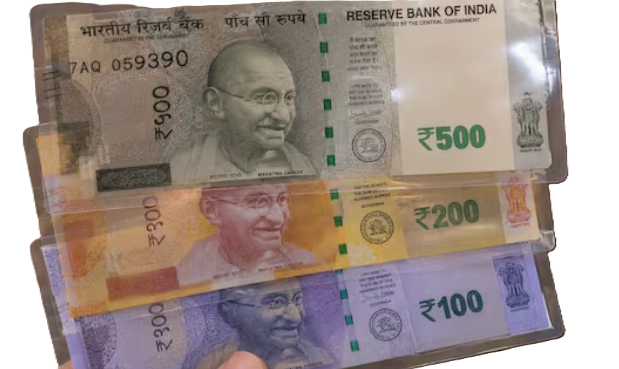
Friends, news is spreading all over the internet that the Reserve Bank of India (RBI) is planning to phase out the current ₹500, ₹200, and ₹100 paper currency notes and replace them with plastic (polymer) banknotes. Many articles claim that India is preparing for a major change in its currency system. But why is RBI considering this move? Let’s understand the reasons in detail.
First, let’s compare India’s currency with other countries. The current Indian ₹500 note, the U.S. $1 bill, and the Euro are all primarily made of paper based material, not plastic. However, countries like Canada and Australia have already switched to polymer banknotes. These plastic paper notes are much more durable and do not tear easily like paper currency. If you look closely at Canadian polymer notes, they have transparent windows, holograms, metallic images, and advanced security features that make them much harder to counterfeit.https://timesofindia.indiatimes.com/business/india-business/reserve-bank-of-india-planning-polymer-notes-new-money-indias-currency-might-soon-get-a-plastic-makeover/articleshow/132476206.cms
Polymer Paper is not new in India
Australia was actually the first country to introduce polymer banknotes in 1988. Canada followed later and adopted polymer currency to address a growing counterfeit currency problem. These notes are not only stronger but also last much longer than paper notes. Now, many people are worried that this means another demonetization like the one announced by Prime Minister Narendra Modi in 2016. According to current reports and discussions, that is not expected to happen. Instead of suddenly declaring existing notes invalid, banks would gradually withdraw old paper notes from circulation. For example, when someone deposits an old ₹500 note in a bank, that note may not be reissued. Instead, customers may receive newly printed notes, and eventually polymer notes once they are introduced. This is similar to how ₹2,000 notes were slowly withdrawn from circulation without an overnight ban. Although ₹2,000 notes remain legal tender if held by the public, they are rarely seen because banks stopped reissuing them.
Interestingly, India has already experimented with polymer currency. Around 2012, the government launched a pilot project involving approximately one billion polymer ₹10 notes in cities such as Kochi, Mysuru, Jaipur, Bhubaneswar, and Shimla. However, the experiment did not become successful because many ATMs at the time were not designed to dispense polymer notes properly.
Nepal also experimented with polymer ₹10 notes in 2002 but eventually discontinued them. Many people complained that the notes were too slippery, difficult to count manually, and more expensive to print than traditional paper notes.
Longer life span off new currency
While polymer notes are more expensive to manufacture initially, they typically last nearly. This means fewer damaged notes need replacement, reducing long term printing costs. For example, during FY 2025 26, around 1,200 crore worn out ₹100 and ₹500 notes reportedly had to be destroyed and replaced. If polymer notes remain usable for much longer, the government could save a substantial amount of money over time.https://unbiasedpollkhol.com/
Another important reason is the growing use of digital payments alongside continued heavy cash circulation. Although UPI has become extremely popular in India, cash usage remains high. Many businesses and individuals continue to conduct large cash transactions, sometimes avoiding taxes by keeping their income outside the formal financial system. India’s total cash in circulation has reached approximately ₹42.8 lakh crore, and the government wants to improve transparency and reduce excessive cash dependency.
There is also speculation that gradually reducing the circulation of high value paper notes may make it more difficult to store large amounts of unaccounted cash. For example, holding ₹1 crore in ₹200 notes requires much more physical space than holding the same amount in ₹500 or ₹2,000 notes.
Fight against Counterfeit Currency
Fake Indian currency remains a serious concern. During FY 2024 25, banks reportedly detected around 217,000 counterfeit ₹500 notes. In FY 2025 26, that number reportedly increased to approximately 229,000, representing a noticeable rise. These figures only represent counterfeit notes identified by banks. Many fake notes may continue circulating because people who realize they possess counterfeit currency often try to spend it elsewhere instead of depositing it in banks, where the fake notes would be confiscated.
Countries that switched to polymer currency have seen impressive results. Canada, for example, faced one of the highest counterfeit currency rates among major economies between 2001 and 2004. After introducing polymer banknotes in 2011, counterfeit incidents reportedly dropped by over 90%. Advanced security features such as transparent windows, metallic holographic elements, hidden numbers, and sophisticated printing technology made the notes significantly more difficult to copy.
Although polymer notes cost more to print initially, their longer lifespan and enhanced security can reduce overall expenses while also helping combat counterfeiting.
Printing costs also vary by denomination. Lower value notes cost less than higher value notes, but every note eventually wears out and must be replaced. Since polymer notes survive much longer under regular use, the higher initial investment may result in substantial savings over the long term.
Another way to distract Indians from E 20 ruckus that Modi and Gadkari ne milkar macha rakha hai