
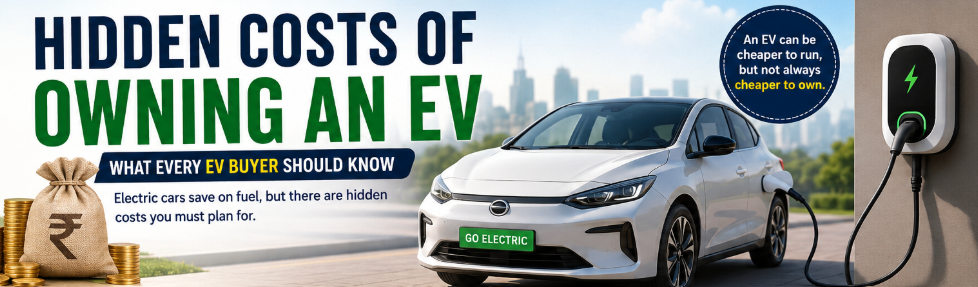
Electric vehicles are becoming increasingly popular across the world. Rising fuel prices, government incentives, and growing environmental awareness have encouraged thousands of people to replace their petrol or diesel cars with electric alternatives.
Hidden Costs of Owning an EV Car: What Every Buyer Should Know
Manufacturers often highlight the biggest advantage of EVs the low running cost. Charging an electric car at home generally costs much less than filling a petrol tank, and electric motors require fewer routine maintenance items because there are no engine oil changes, clutch replacements, or exhaust systems to maintain, However, many first-time buyers only discover that purchasing an EV involves several additional expenses that are rarely discussed during the buying process.
This doesn’t mean electric vehicles are a bad investment. In fact, for many people, they are an excellent choice. But understanding the complete ownership cost helps buyers make a smarter financial decision. https://timesofindia.indiatimes.com/auto/news/electric-vehicles-are-cheaper-to-run-so-why-are-many-consumers-still-hesitant/articleshow/129879040.cms
1. The Home Charger May Not Always Be Included
Most electric cars support multiple charging options, typically a standard home charger and a higher capacity wall charger. Depending on the manufacturer and variant, the faster charger may not always be included in the purchase price. A higher capacity home charger can cost tens of thousands of rupees, making it an additional investment that many buyers do not initially budget for.
Although faster home chargers reduce charging time, they still generally require several hours to fully charge the battery overnight.
2. You May Need to Upgrade Your Home’s Electrical Connection
Many homes, especially apartments, have a limited sanctioned electrical load. If your charger requires additional power capacity, your electricity provider may require an upgrade to your electrical connection.
- Application fees
- Electrical inspection
- Meter replacement
- New wiring
- Installation charges
Apartment owners may also need permission from their housing society before installation begins.
3. Installation Costs Can Increase Quickly
Home charging is generally the most economical option, However: people who depend on public charging stations often pay considerably more per unit of electricity. Fast charging stations are convenient during long trips, but convenience comes at a premium. Regular reliance on public charging can reduce the cost advantage that many buyers expect from EV ownership.
4. Multiple Charging Networks Can Be Inconvenient
Unlike petrol stations where almost every outlet works similarly, public EV charging infrastructure is still developing, Different operators use different mobile applications, pricing structures, membership systems, and payment methods. Although UPI and card payments are becoming more common, many charging providers still encourage users to maintain wallet balances or create accounts before charging.
5. Installation Costs Can Increase Quickly
Most manufacturers provide only a limited length of charging cable. If your parking space is far from your electrical meter, additional wiring becomes necessary.
This can increase costs because homeowners may need:
- Longer cables
- Additional conduit piping
- Civil work
- Professional electricians
- Society approvals in apartment buildings
6. Battery Replacement Can Be Expensive
Battery replacement is probably the biggest financial concern among prospective EV buyers. Although modern EV batteries are designed to last many years and are typically covered by long warranties, replacement outside warranty can be expensive depending on the vehicle and battery size.
Fortunately, complete battery replacement is relatively uncommon during the warranty period, but buyers should still understand this potential long term cost before purchasing an EV https://unbiasedpollkhol.com/.
7. Repairs Require Specialized Expertise
EVs contain sophisticated electronics, high voltage systems, and advanced software. If a major issue occurs outside warranty, repairs often require trained technicians and authorized service centers.
Unlike conventional vehicles, independent garages may not always have the tools or expertise required for diagnosis. This can increase repair costs and, in some cases, result in longer repair times.
You may need to agree expensive or cheaper but this is future…